How one hands-on session is reshaping what tech education looks like at a small Kerala college
There's a particular kind of energy in a room when theory stops being theory. At the College of Applied Science, Vadakkencherry, that energy showed up on a recent afternoon when students traded lecture slides for live sensor data, swapped textbook diagrams for working circuits, and spent a few hours learning what it actually feels like to build something that thinks.
The occasion was a hands-on IoT and Robotics workshop led by Reneesh Rajavel, an IoT engineer whose background spans computer vision and embedded systems work in the industry. CAS Vadakkencherry has been quietly building a reputation among IHRD-affiliated institutions in Kerala for punching above its weight on practical, industry-relevant learning, and sessions like this aren't a one-off novelty. They're becoming part of the identity.
Why a Workshop Like This Matters
Kerala has no shortage of engineering and applied science colleges. What tends to separate the ones students actually talk about, the ones that show up in conversations about best colleges in Palakkad for technology programs, is whether the syllabus survives contact with the real world. Lecture-only IoT modules look fine on paper. They fall apart the moment a student tries to wire an actual sensor to an actual microcontroller and watches it do absolutely nothing.
CAS Vadakkencherry's answer to that gap was straightforward: bring someone who builds this stuff for a living into the room, hand the students hardware, and let the debugging begin.
Reneesh walked the group through the building blocks of a modern IoT pipeline: sensors collecting raw data, microcontrollers processing it, and the logic that turns scattered numbers into something a robot can act on. Rather than treating "IoT" as an abstract buzzword, the session broke it into the layer-by-layer reality of how connected devices are actually engineered. Signal comes in, a decision gets made, and an action follows.
From Spreadsheet to Circuit Board
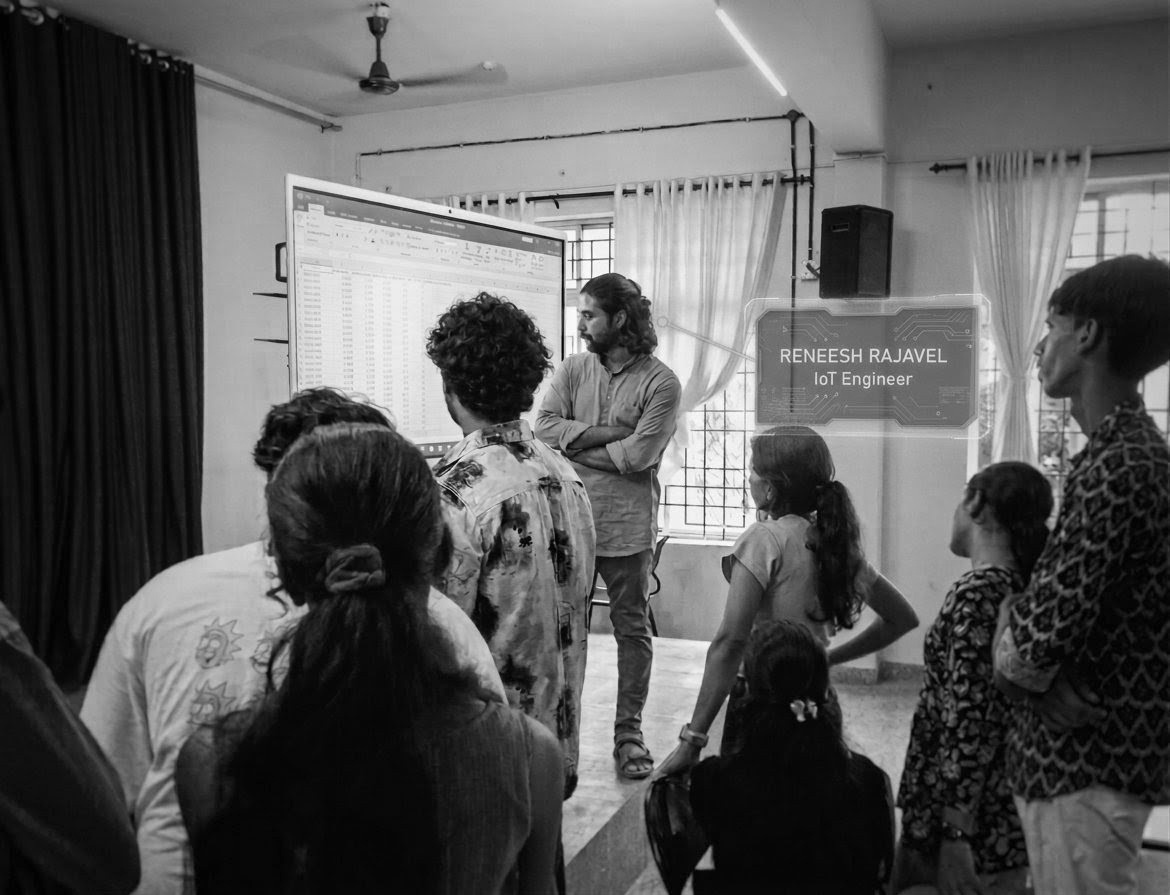
One of the more memorable stretches of the workshop had nothing to do with motors or wires at all. Reneesh pulled up a live spreadsheet of sensor readings on the smartboard and walked students through reading raw data the way an engineer does in the field. It's messy and numeric, and only useful once you know what you're looking for.
It's a small moment, but it's exactly the kind of practical-skills exposure that students at applied science colleges in Kerala often say they wish they got more of: not just "here's the concept," but "here's what it looks like when the concept is staring back at you from a screen, and here's how you make sense of it."
From there, the session moved into the robotics side, translating that data into physical response, the layer where IoT stops being software and starts becoming something you can watch move.
A Teaching Style Built on Proximity, Not Performance
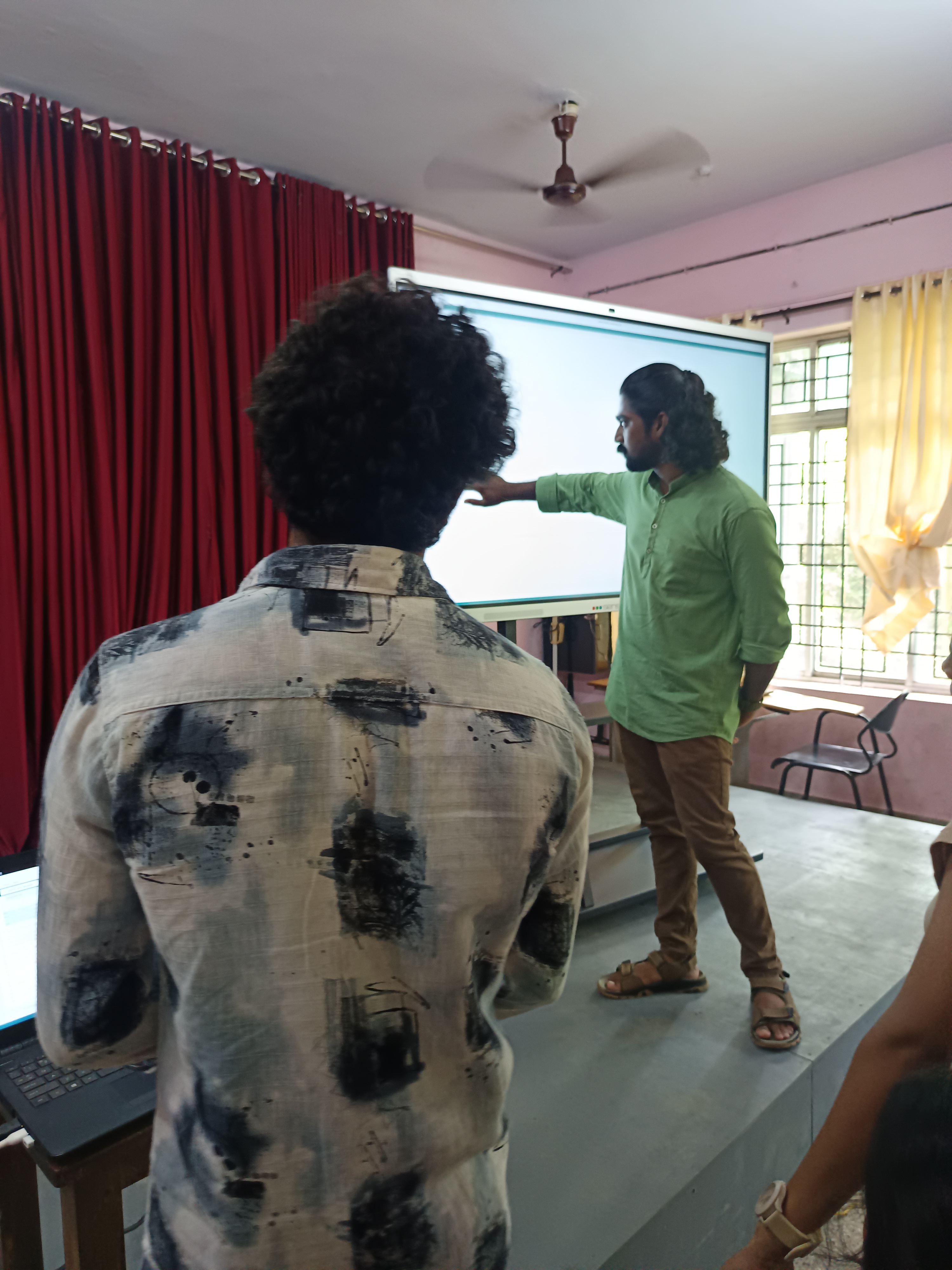
What stood out wasn't a polished stage presentation. If anything, it was the opposite. Students stood close, leaned in, and asked questions mid-explanation rather than saving them for the end. Reneesh moved around the room rather than staying fixed at the podium, pointing at the smartboard and gesturing through explanations, treating questions as part of the session rather than an interruption to it.
That informality is, in its own way, a teaching philosophy. Industry professionals who run workshops at smaller colleges tend to know that the value isn't in replicating a corporate training deck. It's in being reachable. A student who can tap an engineer on the shoulder and ask "wait, why did that value spike?" learns differently than one watching a recorded webinar.
Where This Fits Into CAS Vadakkencherry's Bigger Picture
Workshops like this don't happen in isolation at CAS Vadakkencherry. They sit alongside a broader push within the college's tech-facing departments, including the student-driven initiatives under DIDC (the Digital Infrastructure and Development Committee), to keep students building rather than only studying. It's the same instinct behind treating software, hardware, and systems thinking as connected disciplines rather than separate exam subjects.
For prospective students and parents evaluating engineering and applied science colleges near Palakkad, this is often the detail that doesn't show up in a brochure: how often does the syllabus leave the page? At CAS Vadakkencherry, sessions like Reneesh's IoT and Robotics workshop are part of the answer, a college that treats "applied" as something more than a name.
The Takeaway
Good workshops do two things at once. They teach a skill, and they raise the bar, often without anyone quite noticing, for what students expect from their own education. Reneesh Rajavel's session managed both, demystifying IoT and robotics for students who'd mostly encountered the terms in textbooks, and giving CAS Vadakkencherry one more reason to keep coming up in conversations about colleges in Kerala that actually walk the walk on hands-on, industry-aligned learning.
If this is the kind of exposure students are getting in a single afternoon workshop, it's worth asking what four years of it adds up to.